Introduction.
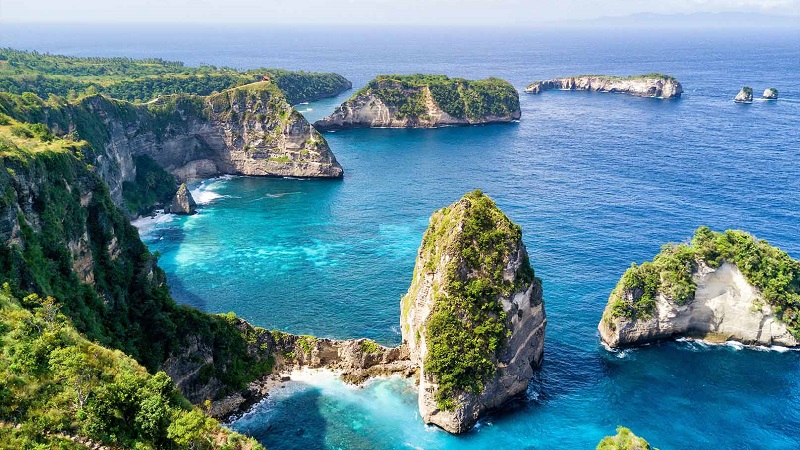
In recent years, Nusa Penida — the “untouched gem” located east of Bali — has become a dream destination for millions of travelers. Among the countless scenic spots on this island, Kelingking Beach stands out as a breathtaking natural wonder, famous for its unique cliff formation resembling a T-Rex bending down toward the vast, endless ocean. When you set foot here, you’re not just witnessing a place that went viral on Instagram — you’re immersing yourself in the heartbeat of raw nature, listening to waves crashing against ancient cliffs as the wind carries echoes of Bali’s ancestral stories.
The Journey to Kelingking Beach – Where Travel Meets Culture
The connection between Bali and Nusa Penida
Nusa Penida is more than a beautiful island; it’s an extension of Bali’s Hindu culture. Although separated geographically, Penida plays an important spiritual role for Balinese people. Locals believe that the island was once home to powerful sea spirits and protective deities. Before boats depart from Sanur, you can often see small offerings placed near the bow — a traditional gesture asking the ocean for safety and blessing. For the Balinese, the sea is sacred and must be honored before crossing.
Kelingking Beach – When Nature Creates Its Own Masterpiece
The meaning behind the iconic “T-Rex” shape
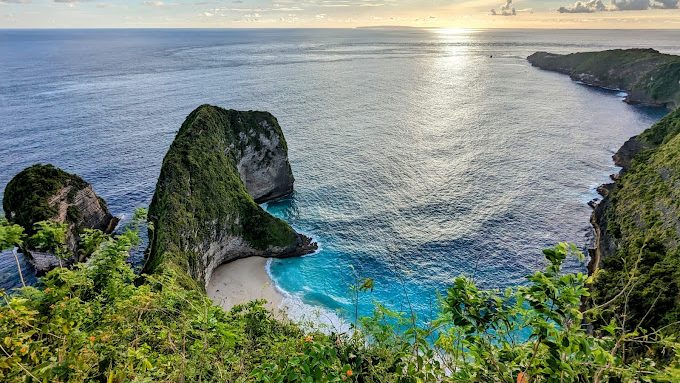
The name “Kelingking” means “little finger” in the local language. However, once aerial photos spread across social media, this cliff quickly gained the globally recognized nickname “Kelingking T-Rex.”
Local folklore associates this shape with “naga,” the sacred sea dragon in Balinese mythology. To them, this dramatic cliff is not just a scenic viewpoint — it represents protection, strength, and the eternal energy of the ocean that surrounds Penida.
Real Travel Experience – From the Eyes of Someone Who Has Been There
- First impression – A breathtaking “wow moment”
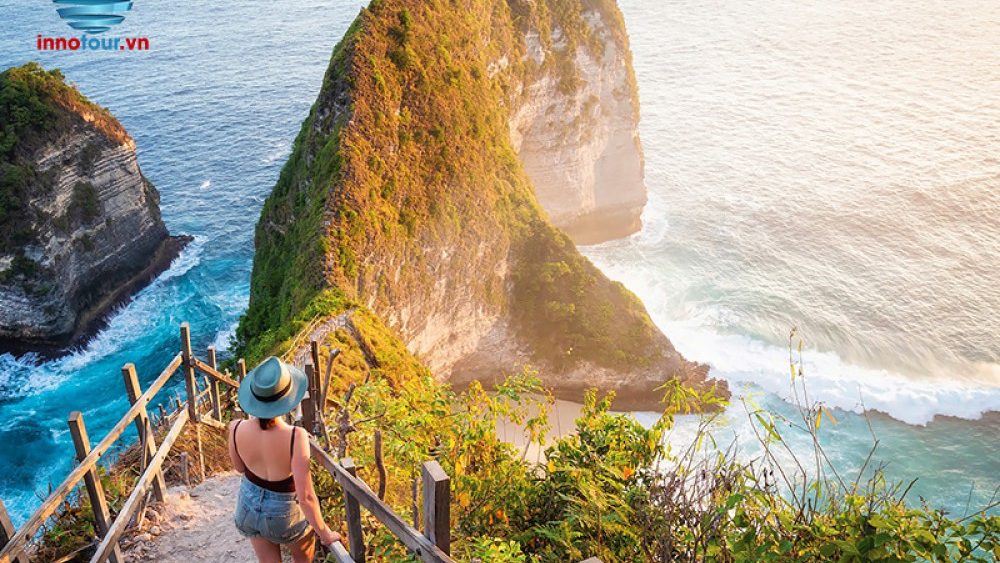
The very first moment you reach the main viewpoint is unforgettable. A massive green cliff stretches gracefully into crystal-blue waters, with white waves swirling at its base. It is a scene so majestic that many visitors fall silent just to soak it in.
No photo can fully express that overwhelming sensation — your heart beats a little faster, your breath grows deeper, and for a moment, you feel incredibly small standing before the grandness of nature.
- The descent – Challenging yet rewarding
The path down to Kelingking Beach is steep, secured with wooden rails and ropes.
As you descend, you’ll feel the salty breeze grow stronger and hear the crashing waves become louder. Sometimes, a sudden gust of wind makes you pause, grip the railing tightly, and look down at the surreal turquoise water below.
The closer you get to the shore, the more mesmerizing the colors become — gradients of aquamarine blending into deep blue, like layers painted by the hand of nature itself.
- Touching the soft white sand – Like stepping into paradise
Once your feet touch the fine white sand, every bit of fatigue disappears. The warmth of the beach mixes with the cool breeze, and the gentle waves brushing against your skin create a soothing sensation.
Many travelers describe this as stepping into “another world” — a world that is quiet, pure, and untouched by city noise.
History and Local Culture – Stories Hidden Behind the Scenery.
The spiritual role of Nusa Penida
According to local beliefs, Nusa Penida is the realm of Ratu Gede, a sacred deity in Balinese Hinduism. Balinese families often travel here to pray for protection, especially during major ceremonies.
It’s not unusual to see small rituals being performed near the beach — offerings of flowers, holy water, and incense placed gently on the ground. These acts reflect Bali’s core value: respect for nature and the spiritual world.
Geological origin of Kelingking
Kelingking’s dramatic cliffs were formed through millions of years of ocean erosion. The limestone formations, natural cuts, and elegant curves are prime examples of a rare geological pattern known as coastal karst formations. Geologists consider this area one of Southeast Asia’s most intriguing natural structures due to its unique composition and shape.
Essential Travel Tips for Visiting Kelingking Beach
Best time to visit
May – October: dry season, clear skies, calm water.
7 AM – 10 AM: soft lighting and fewer crowds.
Sunset: one of the best spots on the island to watch the day fade away.
Getting there
From Bali → Nusa Penida: high-speed boat from Sanur (30–40 minutes).
On the island → rent a motorbike or hire a private driver. Roads can be bumpy.
Important notes
Wear proper shoes instead of slippers.
Bring water and sunscreen.
Waves can be strong — avoid swimming too far.
The descent is not recommended for elders or those afraid of heights.
Recommended 1-Day Itinerary to Explore Nusa Penida
- Kelingking Beach
Scenic viewpoint → trek down → enjoy the beach → photography.
- Broken Beach
An iconic natural stone arch.
- Angel’s Billabong
A stunning natural infinity pool with crystal-clear water.
- Crystal Bay
Perfect for snorkeling and sunset watching.